

8171 Ehsaas Program Phase 3 continues to be a vital social safety net for millions of families in Pakistan. Designed to support low-income households, this phase of the program brings updated payment structures, enhanced eligibility verification, and streamlined CNIC-based processes to ensure that the assistance reaches those who need it most. For individuals and families seeking financial relief, understanding how to check eligibility, verify CNICs, and access payments is crucial.
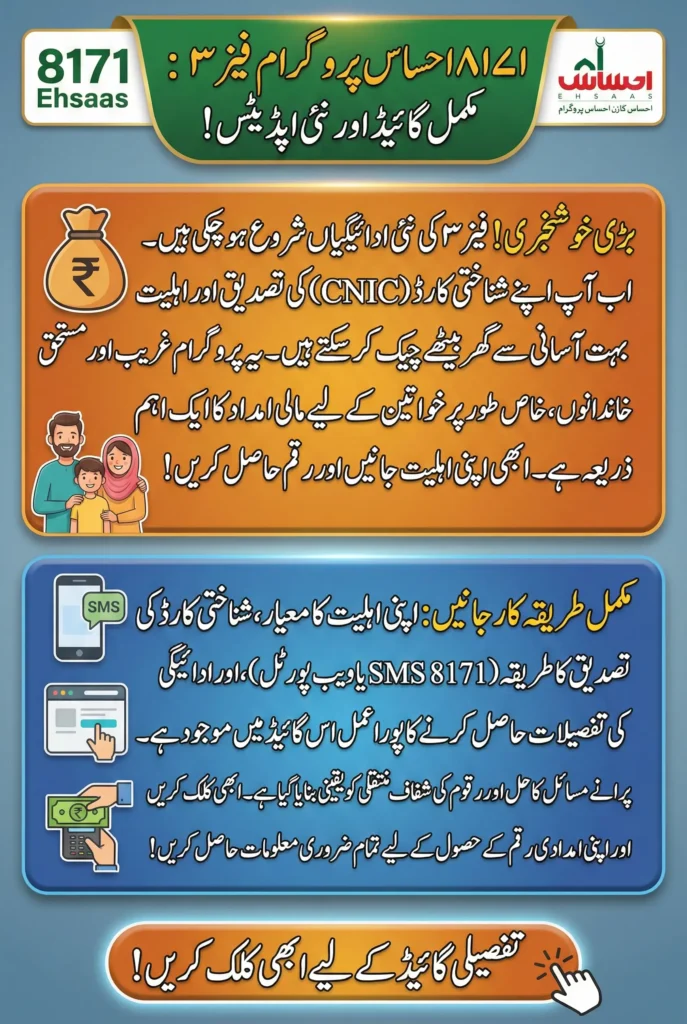
Understanding 8171 Ehsaas Program Phase 3
Phase 3 of the 8171 Ehsaas Program is part of the federal government’s ongoing commitment to poverty alleviation. This program targets underprivileged families who have previously been verified under BISP or similar initiatives. With the latest phase, the government has increased the efficiency of payment disbursements and reduced delays that were common in earlier phases. It also ensures transparency through CNIC-based verification, which minimizes errors and fraudulent claims.
Eligibility Criteria for Beneficiaries
To qualify for Phase 3 of the 8171 Ehsaas Program, applicants must meet specific requirements set by the Ministry of Poverty Alleviation. Eligibility primarily depends on household income, family size, and prior registration under government assistance programs. The program prioritizes women as primary recipients to enhance household financial stability. Other key eligibility points include:
- Must be a Pakistani citizen with a valid CNIC.
- Household income below the nationally defined poverty threshold.
- Priority given to women, widows, and single-income households.
Understanding these criteria can help potential beneficiaries determine if they are eligible before proceeding with CNIC verification and payment collection.
How to Verify CNIC for 8171 Ehsaas Program
CNIC verification is a critical step in Phase 3 of the Ehsaas Program. It ensures that payments are sent only to verified recipients and helps prevent duplication of benefits. Beneficiaries can check their CNIC through multiple channels:
- Sending their CNIC number via SMS to 8171 from any registered mobile number
- Visiting the official Ehsaas Program website and entering the CNIC in the verification section.
- Contacting the nearest Ehsaas registration center for in-person verification assistance.
Once the CNIC is verified, beneficiaries can proceed to receive payments through the designated channels.
You Can Also Read : Benazir Kafalat Face Verification System for 14500 New Qist January 2026
Payment Details and Disbursement Process
The 8171 Ehsaas Phase 3 program disburses funds directly to eligible households. Payments are typically transferred via bank accounts or mobile wallets registered under the recipient’s CNIC. For those without bank accounts, the government provides arrangements through local Ehsaas centers or partner banks. Key highlights of the payment process include:
- Payments are sent directly to the verified CNIC holder.
- Beneficiaries can track payment status via SMS or the online portal.
- Funds are available for withdrawal at designated banks or mobile financial services.
How to Check Payment Status
Keeping track of payment status is essential for beneficiaries to plan household expenses. Checking the status is straightforward:
- Send an SMS with your CNIC to 8171 and receive confirmation of payment date and amount.
- Use the official Ehsaas website to input your CNIC and view payment details.
- Visit local Ehsaas centers if online or SMS verification is unavailable.
Common Issues and Resolution
Some beneficiaries may face challenges during CNIC verification or payment collection. Common problems include incorrect CNIC entries, delayed payments, or missing data in the system. Resolving these issues typically requires:
- Rechecking CNIC entry for errors.
- Contacting the 8171 helpline or visiting the nearest Ehsaas center.
- Ensuring bank account or mobile wallet details are correctly registered.
Conclusion
Phase 3 of the 8171 Ehsaas Program is a crucial initiative for providing financial support to vulnerable families across Pakistan. By following the CNIC verification process and understanding eligibility criteria, beneficiaries can ensure they receive timely payments.
Staying informed about disbursement methods, payment tracking, and issue resolution empowers recipients to fully benefit from this government support. With efficient implementation, Phase 3 continues to strengthen Pakistan’s social safety net and improve the lives of millions of families.