
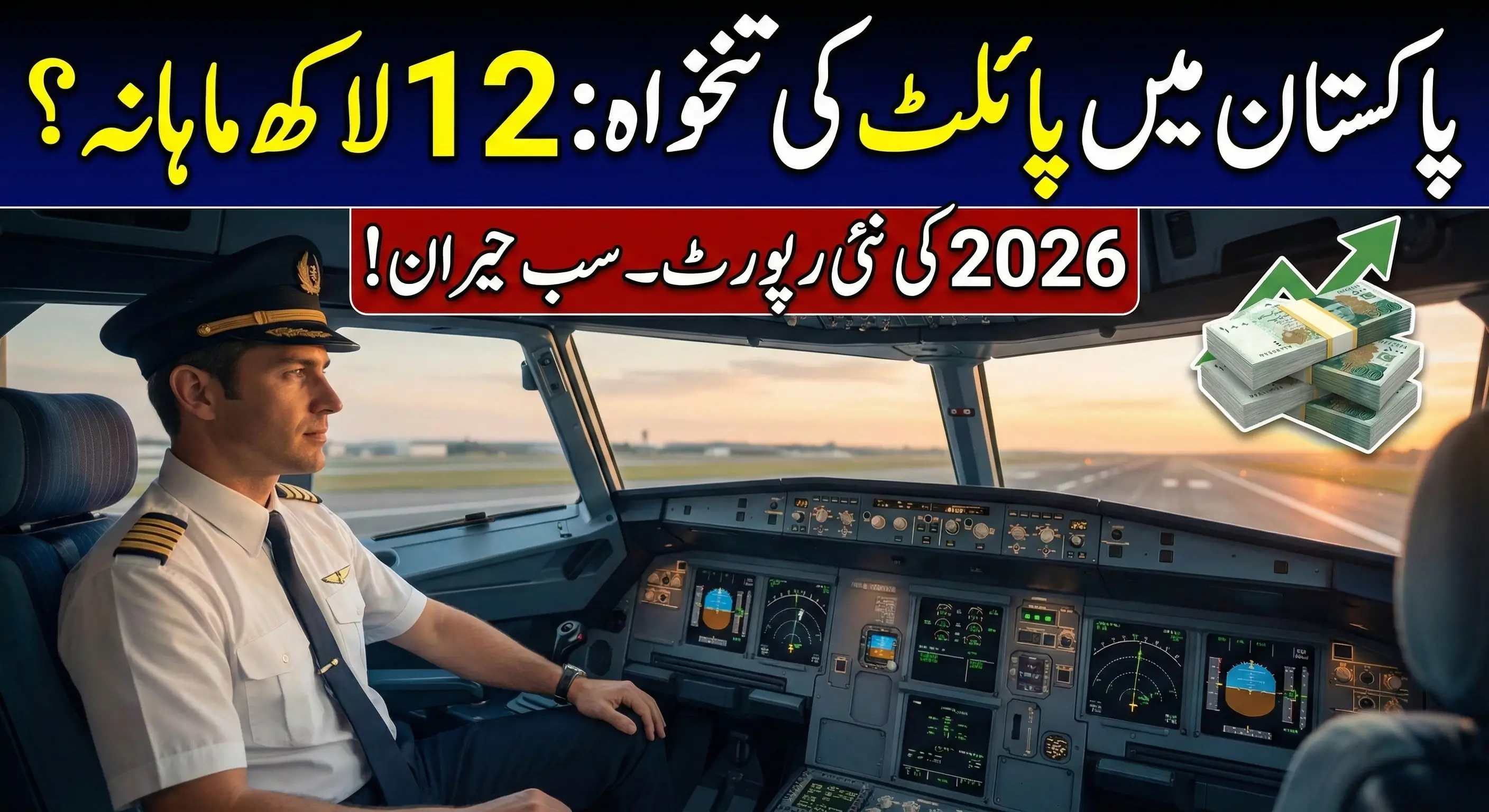
Pilot Salary in Pakistan 2026 Choosing a career as a pilot is often seen as both exciting and financially rewarding. In Pakistan, aviation continues to attract young professionals who dream of flying commercial aircraft while earning a stable income.
By 2026, the demand for trained pilots remains steady, and salaries vary depending on experience, airline, and type of aircraft operated. This guide explains the expected monthly pay, additional benefits, and long-term career opportunities for pilots in Pakistan in simple and clear terms.

Overview of Pilot Salaries in Pakistan
Pilot salaries in Pakistan are not fixed because they depend on training level and job position. Entry-level pilots typically earn less while senior captains receive significantly higher compensation. Airlines consider factors such as flying hours, aircraft category, and international routes when deciding pay scales. On average, pilots earn competitive salaries compared to many other professions in the country, which is one reason aviation remains a popular career choice.
You Can Also Read : BISP 8171 Payment Schedule 2026
Monthly Pay by Experience Level
A pilot’s monthly income increases as they gain experience and certifications. Fresh graduates entering the field usually start as trainee or first officers, while experienced professionals progress to captain roles.
Key Details
| Position | Estimated Monthly Salary (PKR) | Experience Level |
| Trainee Pilot | 80,000 – 150,000 | Training phase |
| First Officer | 250,000 – 450,000 | Early career |
| Senior First Officer | 450,000 – 700,000 | Mid career |
| Captain | 700,000 – 1,200,000+ | Experienced |
These figures are approximate and can vary based on the airline and international exposure.
Benefits and Allowances
Apart from the base salary, pilots often receive additional benefits that improve their overall compensation package. These perks make aviation careers more attractive.
Common benefits include:
- Free or discounted air travel
- Medical insurance coverage
- Housing or accommodation support
- Meal and travel allowances
- Retirement or provident fund contributions
Such incentives add significant value beyond the monthly paycheck.
You Can Also Read : Sialkot PSL Team News Hania Aamir Brand
Training Costs and Investment
Becoming a pilot requires a substantial investment in training and licensing. Flight school fees and certification expenses can be high, so aspiring pilots must plan financially before entering the field. However, once employed, many professionals recover their investment over time due to steady earnings and career growth. Some airlines may also provide partial sponsorship or training assistance.
Career Growth and Opportunities
The aviation sector offers long-term advancement opportunities for dedicated individuals. Pilots can move into higher command roles or shift to international airlines after gaining experience.
Career progression often includes:
- Advancing from first officer to captain
- Transitioning to larger aircraft operations
- Working with international carriers
- Becoming flight instructors or trainers
This growth potential ensures stability and professional development.
You Can Also Read : Benazir Kafalat Payment 2026 Update
Demand for Pilots in 2026
With air travel gradually expanding in Pakistan and globally, trained pilots remain in demand. Airlines continue to recruit skilled candidates who meet international safety and training standards. While competition exists, qualified individuals with strong performance records have good prospects in both domestic and foreign markets.
Conclusion
A pilot’s career in Pakistan in 2026 offers a combination of respectable earnings, valuable benefits, and strong long-term potential. Although the initial training investment can be significant, the rewards often justify the effort. From trainee roles to captain positions, salary levels increase steadily with experience. For those passionate about aviation and committed to professional training, becoming a pilot remains a promising and prestigious career path.